
HA vs DRS vs Live Migration: What's the Difference?
HA, DRS and live migration solve different virtualization challenges. Learn how they support availability, VM mobility and resource optimization.
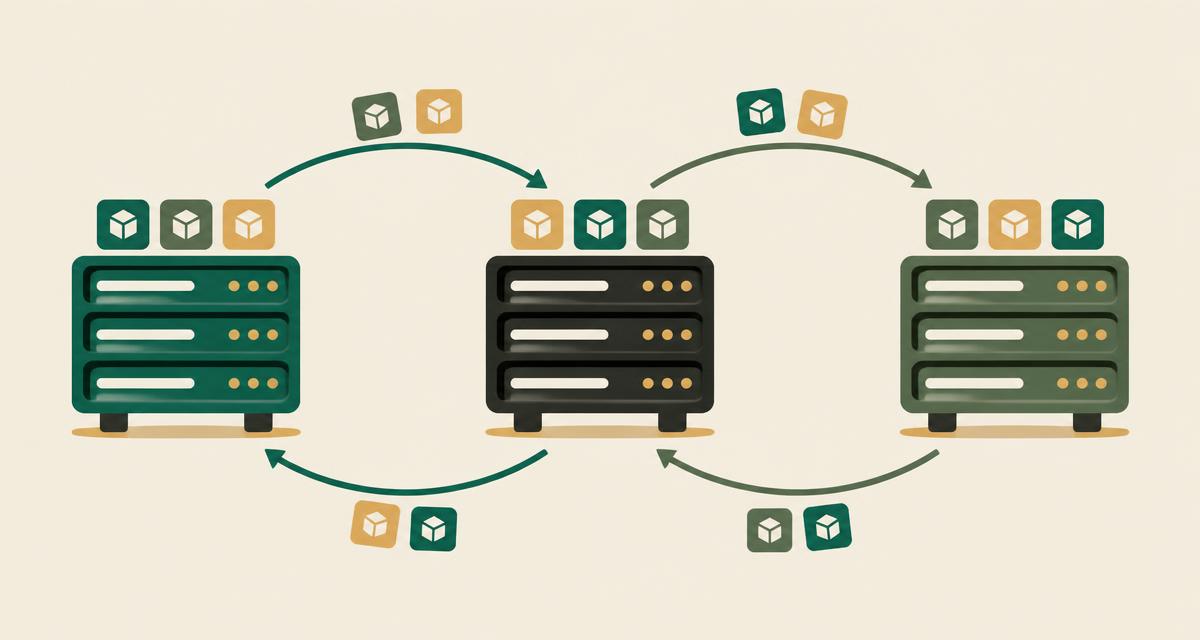
High Availability, DRS and live migration are often discussed together, but they solve three different infrastructure problems. In short: HA restarts workloads after a host fails, live migration moves a running VM between hosts, and DRS decides where VMs should run to keep resources balanced. Comparing HA vs DRS vs live migration side by side makes it easier to design a virtualization environment that is both resilient and efficient.
HA vs DRS vs live migration at a glance
Each capability responds to a different event and takes a different action.
| Capability | Main problem | Typical action | Trigger |
|---|---|---|---|
| High Availability (HA) | Host failure | Restart affected VMs on healthy hosts | Unplanned — host or heartbeat loss |
| Live migration | Maintenance and workload mobility | Move a running VM to another host | Planned — administrator or automation |
| DRS | Resource imbalance | Optimize VM placement across hosts | Continuous — load thresholds and policies |
- Detects host failure
- Restarts VMs elsewhere
- Short restart downtime
- Moves running VMs
- Enables maintenance
- Minimal interruption
- Watches CPU and memory
- Recommends or moves VMs
- Keeps cluster balanced
What is high availability?
Virtual machine high availability protects workloads against the failure of a physical host. Hosts in a cluster monitor each other through heartbeats. When a host stops responding, the cluster confirms the failure and restarts the VMs that were running on it on the remaining healthy hosts, using shared or replicated storage.
It is important to be precise about what HA does. It does not keep a VM running through a hardware failure; the VM stops when its host fails and is then booted again elsewhere. HA therefore reduces downtime from hours to minutes, but it does not guarantee zero downtime. Applications that cannot tolerate any interruption need application-level clustering or replication in addition.
HA also depends on capacity planning: the cluster must keep enough spare resources to absorb the VMs from at least one failed host.
What is live migration?
VM live migration moves a running virtual machine from one host to another while it continues to operate. The hypervisor copies the VM's memory to the destination host in rounds, then briefly pauses the VM to transfer the final changes and resumes it on the new host. For most workloads the pause is short enough that users do not notice.
Common uses include:
- Host maintenance such as firmware updates and patching
- Hardware replacement or cluster expansion
- Resource management when a host becomes overloaded
- Planned host shutdown for power or facility work
Live migration requires compatible CPUs across hosts, sufficient network bandwidth and access to the VM's storage from both hosts (or storage migration alongside it). It is a planned operation, not a failure response.
What is DRS?
DRS — Distributed Resource Scheduling — is the logic that decides where VMs should run. Different platforms use different names, but the concept is vendor-neutral: continuously observe CPU and memory use across a cluster, and place or move VMs so that no host is overloaded while others sit idle.
DRS typically acts at two moments: initial placement, when a VM is powered on, and ongoing balancing, when load shifts. It can run in a recommendation mode, where administrators approve moves, or in an automated mode. Placement rules such as affinity (keep VMs together) and anti-affinity (keep them apart) let teams encode application requirements.
DRS and resource utilization
Resource scheduling helps a cluster use its computing resources more evenly. Without it, workloads tend to accumulate on whichever hosts they were first created on, leading to hotspots and wasted capacity elsewhere.
DRS does not create capacity. If an entire cluster is overcommitted, balancing only spreads the contention. It works best alongside sensible sizing, capacity monitoring and headroom for HA. For background on how virtualization shares resources, see what server virtualization is.
How do HA, DRS and live migration work together?
Consider a cluster of three hosts — Host A, Host B and Host C — running a mix of workloads.
- Normal operations: VMs are spread across all three hosts. DRS keeps utilization roughly balanced.
- Resource imbalance: a reporting job drives Host A to high CPU. DRS uses live migration to move a few VMs from Host A to Host C.
- Planned maintenance: Host B needs a firmware update. The administrator puts it in maintenance mode; its VMs are live-migrated to A and C, and Host B is updated with no service shutdown.
- Unexpected host failure: Host C loses power. HA detects the failure and restarts its VMs on A and B. Once C returns, DRS rebalances the cluster.
In this scenario, live migration is the mechanism, DRS is the decision-maker for balancing, and HA is the safety net for failures.
Do you need all three?
It depends on workload and availability requirements. A small environment with stable workloads may rely mainly on HA and occasional manual live migration. Larger or more dynamic clusters benefit from DRS to avoid constant manual rebalancing.
None of these features replace data protection. A deleted file, a corrupted database or a ransomware incident will be faithfully preserved by HA and live migration. For that, you need the approaches described in snapshot vs backup vs disaster recovery.
HA, DRS and live migration in VirtuWa
VirtuWa supports High Availability, DRS and live migration as part of Asas HV, its KVM-based virtualization foundation, with cluster operations managed through Lejam Cloud Manager. These capabilities allow teams to restart workloads after host failures, perform host maintenance without shutting down VMs, and keep clusters balanced.
As with any platform, results depend on cluster design, capacity headroom, storage and network configuration. For how these features fit into a wider operating model, see virtualization vs private cloud.
Explore VirtuWa platform capabilities
See how Asas HV and Lejam deliver HA, DRS and live migration for your clusters.
Explore the platformWhat Is Server Virtualization? How It Works and Why It Matters
Learn what server virtualization is, how virtual machines share physical hardware, and how it improves resource utilization, flexibility and data center operations.
Read articleWhat Is KVM? Understanding Linux Virtualization
Learn how KVM works, how it relates to Linux, QEMU and libvirt, and why KVM has become a foundation for modern server virtualization and private clouds.
Read articleVirtualization vs Private Cloud: What's the Difference?
Virtualization and private cloud are closely related but not the same. Learn how they differ and what management, automation and cloud capabilities add.
Read articleVM Snapshot vs Backup vs Disaster Recovery: What's the Difference?
Snapshots, backups and disaster recovery solve different problems. Learn how each protects virtual machines and why snapshots should not replace backups.
Read article